

The bad apple effect can deeply sabotage a team's performance and development. I had an eye-opening experience outside work that showed me just how much one person's negativity can damage a group. Both my sons play football, one at academy level and the other at grassroots. Despite the difference in level and commitment, I noticed the same troubling pattern emerge in both teams over time.
Even with talented, capable players, the teams often underperformed and struggled to progress. It was not a lack of skill or effort from most of the boys. The issue was more subtle: negative behaviour from a few players was affecting the whole team, in matches and in training.
That led me to look for published research on how negativity affects teams, and to a 2006 study known as the bad apple effect.
The idea is simple. One person showing toxic behaviour, through laziness, constant complaining or being disruptive, can drag down the performance of an entire group. Watching the matches, it was impossible to miss all three behaviours among a few players, which is perhaps understandable in teenage boys. Still, those attitudes were sapping the whole team's morale and teamwork. Most of the players were talented and hard-working, and their performance was overshadowed by the negative atmosphere.
The study, led by Will Felps and colleagues, showed how a single bad apple could significantly reduce a team's output and morale. It identified three types of negative behaviour:
- The jerk. A team member who is consistently critical or disrespectful of others.
- The lazy person. Someone who disengages and does the bare minimum.
- The complainer. Someone who is always negative about outcomes or the team's chances, sapping motivation.
Watching the football, I saw how these behaviours show up in real life: the players who constantly criticised others, the ones who seemed disengaged, and the ones who were always pessimistic about the team's chances.
What is striking is how contagious they are. I have long said, before reading the study, that negativity sucks the energy out of a team, and the matches confirmed it. One boy's disengagement on the pitch quickly spread, dampening everyone else's energy. The whole team got sucked into a downward spiral and, despite having everything they needed to win, they could not deliver.
Have you seen this play out? In your workplace, on a team you have coached, or in a casual setting? It is hard to see at first, but once you notice it the signs are clear. One person's bad attitude becomes a team-wide problem, and even the most enthusiastic members begin to underperform or disengage.
The facts: what the study found
The 2006 study produced some eye-opening numbers:
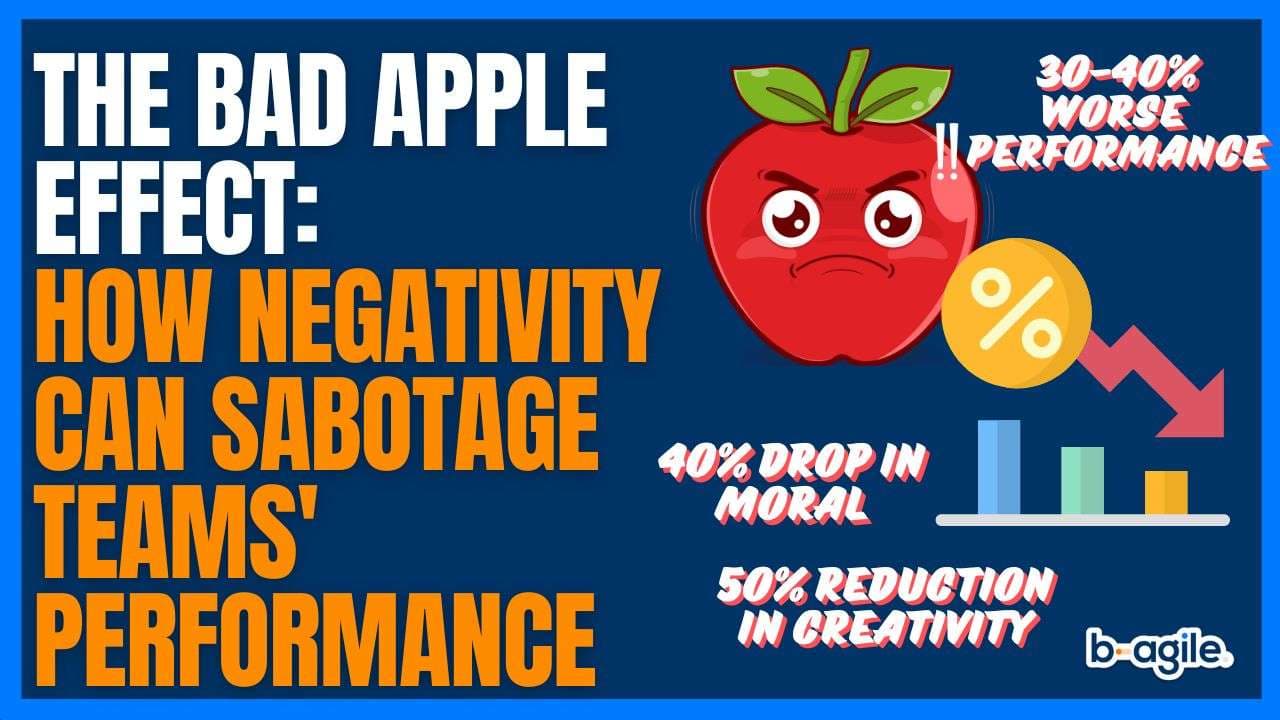
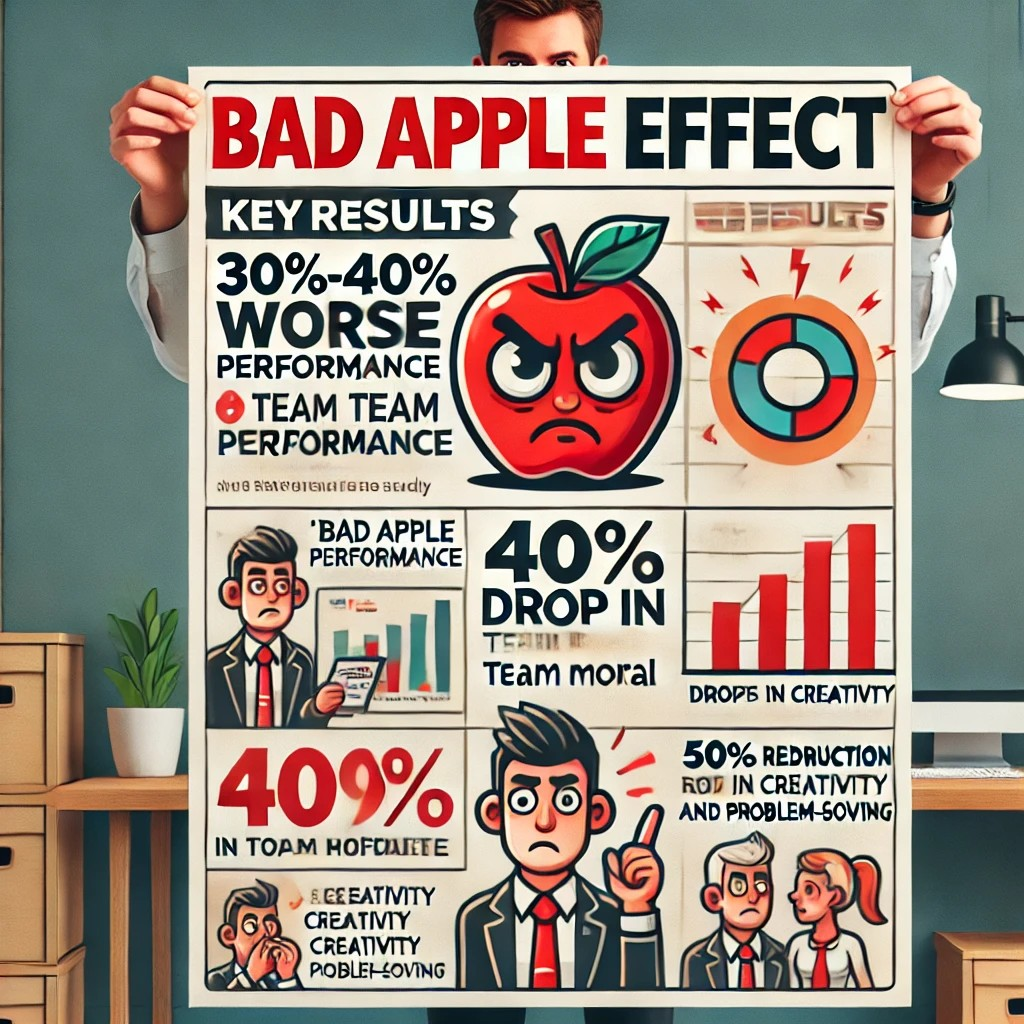
- Teams with a bad apple, one member showing negative behaviour, performed 30% to 40% worse than teams without one.
- Morale dropped 40% in teams coping with the negative behaviour of a single individual.
- Even a team of high performers suffered a significant drop in productivity and cohesion when one negative member was introduced.
- Teams with a negative member saw creativity and problem-solving drop by 50%.
Those figures show how powerful and damaging one person's influence on a team can be.
It underlines the importance of tackling negativity head-on, in sport or in a delivery team. Agile leadership, for example, takes more than following the practices. It takes the right mindset, and the right people "on the bus", as Jim Collins puts it in Good to Great. Agile thrives on collaboration, continuous improvement and its core principles and values. Practices and tools like Scrum and Kanban help teams live those values, but no amount of process overcomes unchecked negative behaviour. One bad apple spoils the bunch. It is not just about the skills each person brings, but their mindset and how it shapes the team's dynamic.
Negativity in agile and Scrum teams
Helping teams adopt Scrum or shift to an agile way of working, I have seen negativity arise from deeper issues than a misunderstanding of the principles. Often it comes from holding on to outdated ways of working, such as focusing on projects instead of outcomes, or neglecting the practices that continuous learning and improvement depend on. The result is frustration, disengagement and resistance.
Common sources include:
- Focusing on outputs instead of outcomes. Teams that stay project-focused rather than outcome-driven get frustrated. The shift to outcomes, supported by a framework such as Evidence-Based Management, is challenging but essential for long-term success.
- Leadership that does not enable self-management. Agile leadership means creating an environment that empowers teams to self-manage, with clear goals and accountability. Leaders who cling to command and control breed negativity and make it harder for teams to grow and collaborate.
- Neglecting continuous learning and improvement. Teams that do not embrace continuous improvement stagnate. Agile thrives where learning is constant and teams adapt on feedback and inspection. Without that, frustration sets in.
- A lack of technical excellence and a quality-first mindset. Neglecting modern technical practices such as continuous delivery and Extreme Programming creates a performance gap. Without technical excellence and a focus on quality first, teams struggle to deliver value consistently, and disengagement follows.
Each of these is damaging if left unaddressed. Overcoming negativity takes a shift in mindset and practice: outcome-driven work, continuous improvement and technical excellence. When a team understands the why, embraces change and focuses on delivering value through learning and quality, it is far more likely to thrive.
Related reading:
How to tackle negativity in a team
If you are facing negativity in your team, whether it relates to Agile, Scrum or anything else, there are four steps to take:
- Encourage open communication. Make sure people feel heard and valued by creating space for feedback. It surfaces issues early, before negativity festers. See Building healthy team relationships using great feedback.
- Address negativity early. Do not let toxic behaviour go unnoticed. Tackle it head-on through one-to-one conversations or coaching, to understand the root cause and help the person shift their mindset.
- Foster continuous learning. Negativity often comes from preconceptions or misunderstandings about agile principles and practices. Create opportunities for deeper learning. A clearer understanding of the core values and practices reduces frustration and resistance.
- Lead by example. As a leader or coach, modelling positive behaviour, collaboration and a growth mindset inspires others to do the same and limits the impact of negativity.
The bad apple effect is not limited to sport or business. It shows the universal impact of unchecked negativity. Whether it is the jerk, the lazy person or the complainer, recognising and addressing the behaviour is crucial to preserving morale and performance. That matters most in agile environments, where collaboration and self-management are essential.
What about you? Have you noticed the bad apple effect in teams you have been part of? How did it affect performance, and what was done about it? I would love to hear your experiences.
If negativity is holding your team back, our agile coaching can help you build a stronger, more adaptable team. For leaders, the Professional Agile Leadership Essentials course is the place to start.
Go deeper
Professional Agile Leadership Essentials (PAL-E)
Put this into practice with the course that covers it in depth.
View the course