
Some questions to sit with before you read on:
- What is the impact on team relationships when feedback is poorly delivered?
- What is the worst feedback you have ever received? What made it the worst?
- What is the best feedback you ever received? What made it great?
- How comfortable are you receiving feedback?
- What happens to your relationships with colleagues when communication is dysfunctional?
- When poor communication is draining the energy of your team, are you sitting back and letting it happen, or taking the lead to create a more positive workplace?
What role does emotional intelligence play in forming great relationships and great teams?
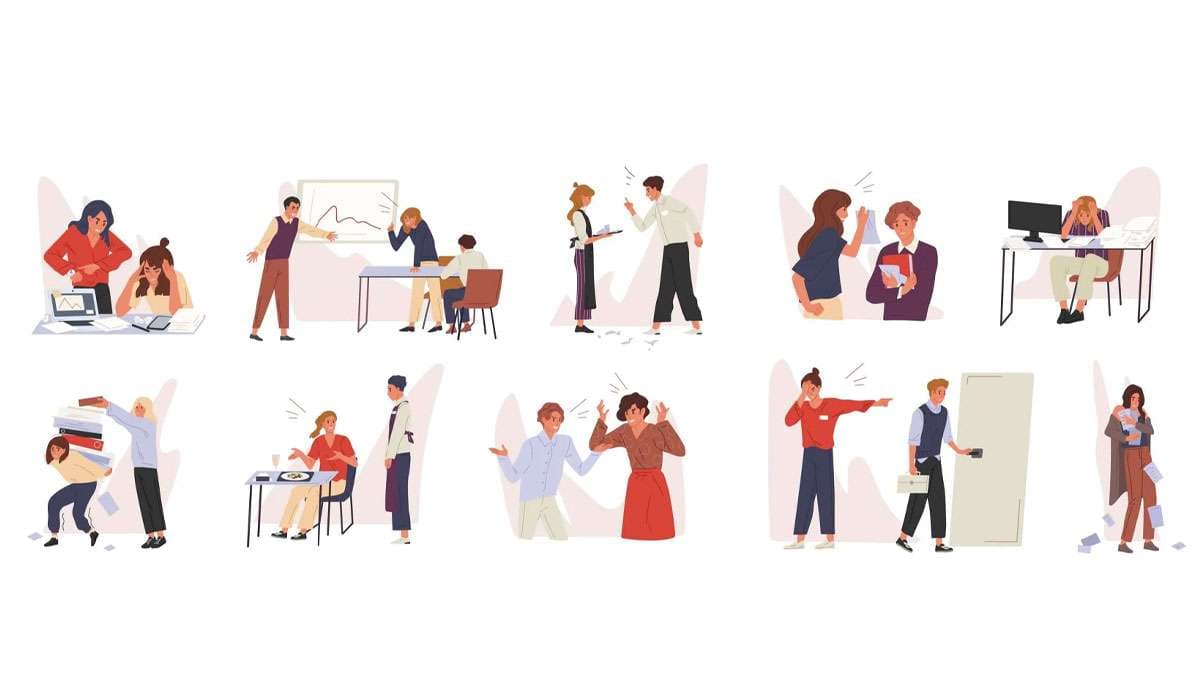
Over the last 30 years I have seen people shouted at in front of a hundred colleagues in an open-plan office. I have watched poor feedback leave people and teams damaged and low in confidence. The result is subdued creativity, low psychological safety, and no confidence to take risks or try new things. Experimentation stops, real teamwork stops, and conflict rises.
We are all leaders. We all have the ability to lead in our own lives. We can all grow our emotional intelligence for the benefit of everyone around us, and build teams with lightness, heart and soul that are truly inspiring.
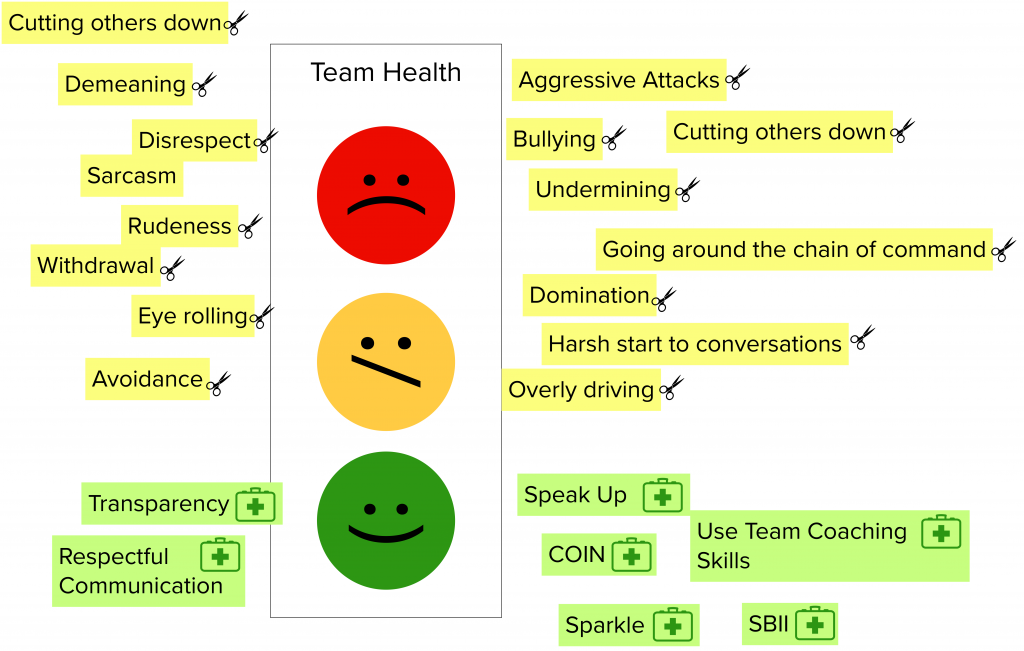
Team knocks and antidotes
In the illustration, the scissor icons are knocks to relationship health. Every knock, left without intervention, moves the relationship a step closer to red.
Feel into your current team relationships. What colour is your team's health right now?
The medicine icons are repair bids, the actions you can take to move into the healthy green zone and stay there.
Stand up for team health
Engage your leader within and show the way. Stand up to poor communication and aggression, and yes, that may include your own. By listening to how you communicate and practising feedback, we can all start to grow our emotional intelligence.
A common feedback method
First, understand that receiving feedback well is difficult. Feedback can feel like a social threat, and it can trigger the amygdala's fight-or-flight response. For that reason, we think it is worth learning to receive feedback well before you focus on giving it well.
Context, Observations, Impact, Next: COIN
Context
When you give feedback, put it in context. When and where did you observe the situation? That gives the other person a specific reference point. For example:
"When we were working with the team this afternoon on the XYZ solution, I observed aggressive personal attacks on the quality of the work the team had completed."
Avoid vague references such as "the other day" or "in that meeting last week".
Observations
Next, describe the specific behaviours you want to address. This is the hardest part, because you should only describe behaviours that you, and you alone, observed directly.
Avoid assumptions and subjective judgements about someone's behaviour. They may be wrong, and they undermine your feedback. For example:
"The feedback was delivered with sarcasm and demeaning language aimed at the skills and experience of the team."
Tip: use measurable information in your description. It keeps the feedback specific and objective.
Impact
Now use subjective statements to describe how the behaviour affected you, the team or the organisation. Use "I" or "we" to make the point. For example:
"The impact I have observed on the team is damaged confidence in tackling complex technical problems and low self-esteem. Teamwork has reduced, and it is affecting self-management, creativity and the safety to experiment."
Throughout, emphasise finding positive solutions. Avoid passing the buck or playing the blame game.
Next
Asking about intent opens a two-way discussion. It helps you understand why your colleague behaved as they did, and gives them the chance to assert themselves and open up about problems they have been experiencing. Perhaps they have confidence issues, or feel their skills and knowledge are not adequate.
Uncovering intent also helps you correct your own false assumptions. Your colleague may have had a legitimate reason for their behaviour that you had not understood. That is how a feedback session develops into a useful coaching conversation.
"Next" ends with designing actions and learning together with the person you are coaching.
What's next
Feedback skills, facilitation, and handling dysfunctional behaviour are at the heart of the team coaching we do. We also offer Co-Active professional and leadership coaching, and relationship and team coaching. Talk to us if you would like help building a healthier team.