

"Helping people and teams solve complex problems."
The complexity of product development
Product development is rarely straightforward. Many projects run late, overspend or hit unexpected challenges. Have you ever worked on a traditional sequential project that overran, exceeded its budget or ran into roadblocks? If so, you are not alone.
Consider the variables in product development related to technology, requirements and people: teammates, leadership, users, customers and stakeholders. Take five minutes and list as many as you can.
Did you identify any of these?

We could carry on listing known variables all day, and we have not even added changing customer behaviour, politics, regulation, law, competition or the other business variables.
- Could unknown variables exist?
- Could unexpected events occur?
- Are some variables interrelated, forming connected systems that influence each other?
- Are some more unpredictable than others?
Product development is complex work with many unknowns. Traditional management approaches struggle with that complexity. To navigate uncertainty, teams need a way to categorise and manage different kinds of problem. That is where a sense-making model like the Cynefin framework helps.
The Cynefin framework
The Cynefin framework was developed to help leaders understand their challenges and make decisions in context. Our actions need to match reality, through a process of sense-making.
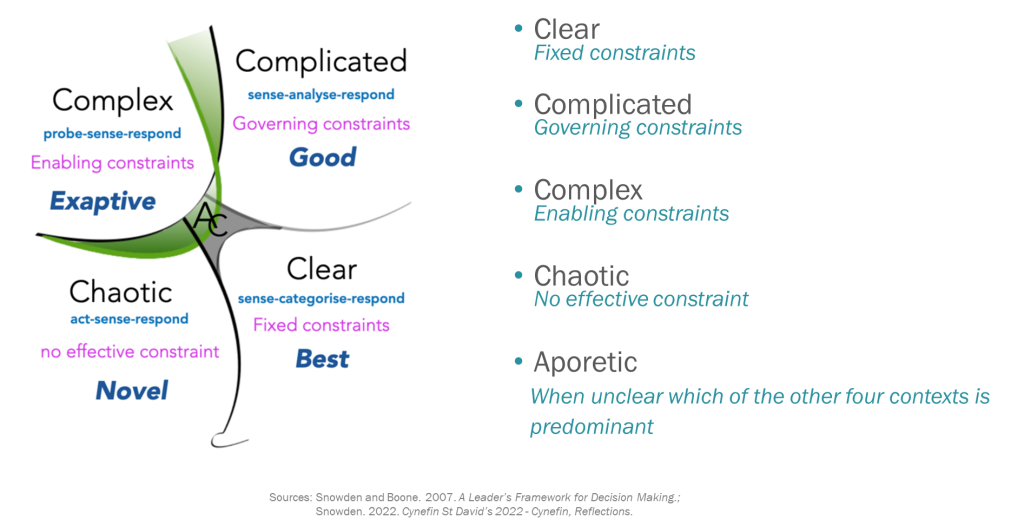
In product development, work ranges from very straightforward, or clear, to completely chaotic. Work can sit in different domains at the same time, or move between them. The level of complexity affects how we approach and manage it.
The complicated domain. If I wanted to cross a large river to transport people and goods, there are existing good practices to guide us. Humanity has solved this problem many times, in many ways. Assemble the experts, plan, execute, and the vision is achieved. Governing constraints work here: traditional programme and project management, one-dimensional leadership such as command and control, and control metrics such as time-based estimates, milestones and scope.
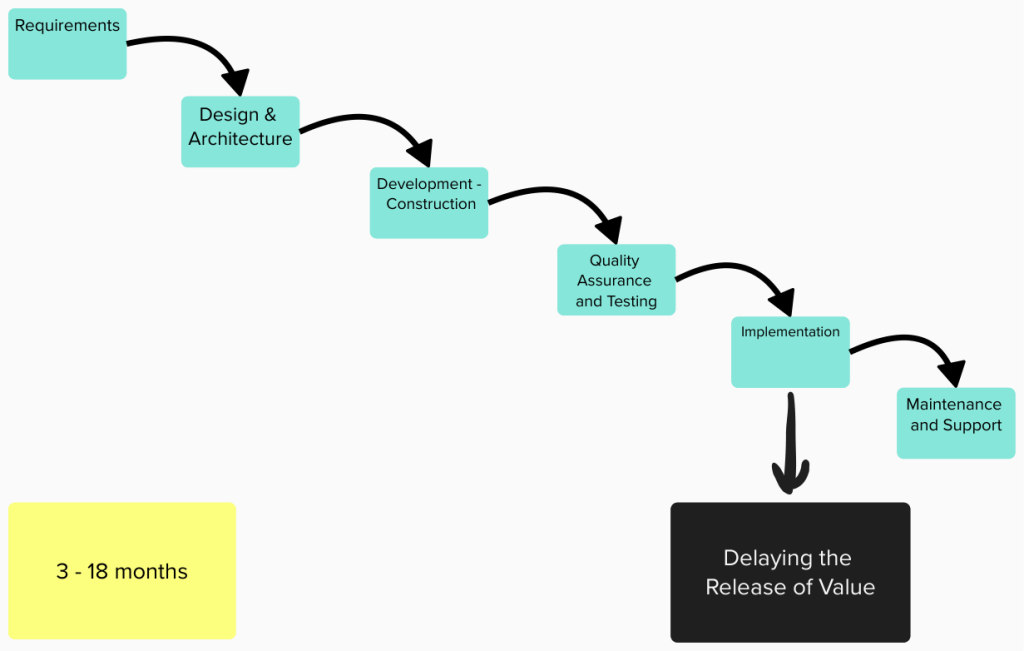
In a sequential approach the release of value is delayed until completion, which delays validation and feedback. That is acceptable for clear and complicated work, where the outcome is known in advance.
Is the UK's HS2 project in the complicated domain? Was it managed with the appropriate leadership style and planning methods?
The complex domain. Operating in the unknown, with unpredictability, is the complex domain. The vision is clear but the path is uncertain, and the variables may change. Creating and executing a fixed plan here is impractical and likely to fail or produce a poor result.
Consider endeavours like:
- Achieving nuclear fusion
- Competing in a digital and AI marketplace
- Travelling near the speed of light
- Developing new digital products and services
Complexity and risk are high, and long-term plans become inaccurate and unmanageable.
Leadership in this domain requires:
- Customer and stakeholder collaboration
- Visionary thinking
- Servant leadership
- Imagination, intuition and insight to enhance effectiveness, creativity and innovation
Empiricism and feedback loops in Scrum
Since complex work cannot be fully planned up front, teams need a way to navigate uncertainty. Scrum does this through empiricism: learning from experience and adapting on feedback.
- Empiricism: based on, concerned with, or verifiable by observation or experience rather than theory or pure logic.
- Feedback: positive feedback amplifies a system's output, producing continuous learning and growth.
In a complex domain, pursuing the vision and product strategy through small experimental feedback loops with verifiable results builds creativity, learning and transparency.
Scrum relies heavily on this principle, and the Scrum Master plays a vital role in building an empirical culture. For more on that accountability, read What is a Scrum Master?
The right tool for the job: Scrum for the complex domain
To navigate these challenges, teams need an approach that builds adaptability and continuous learning, letting them experiment, probe, sense and respond.
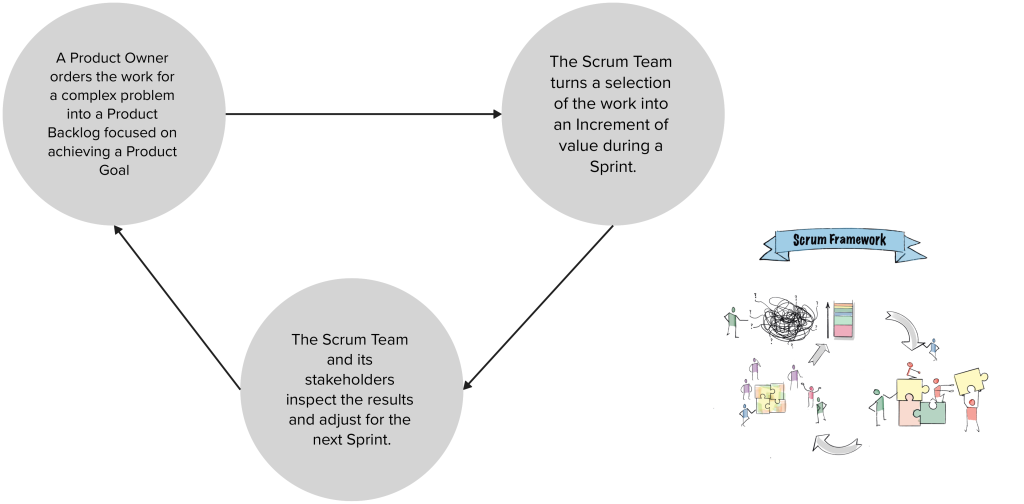
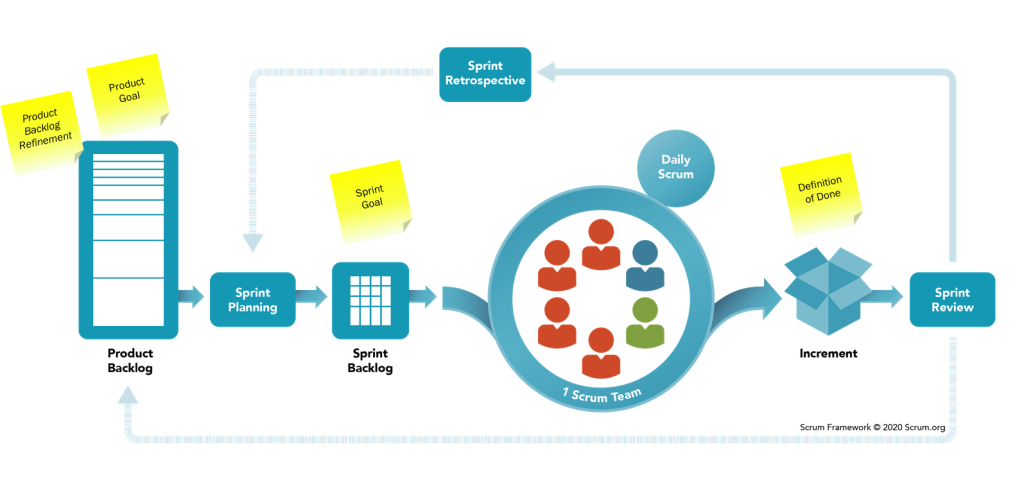
Scrum is a lightweight framework that helps people, teams and organisations generate value through adaptive solutions to complex problems. It is simple and purposefully incomplete, designed to be tailored to the environment it is applied in. For its core principles, read What is Scrum? Uncovering its true essence.
Every Sprint results in a useful, valuable Increment.
- Useful: it works, it is fully tested, and it could be delivered to a customer.
- Valuable: it has potential value to the user or customer.
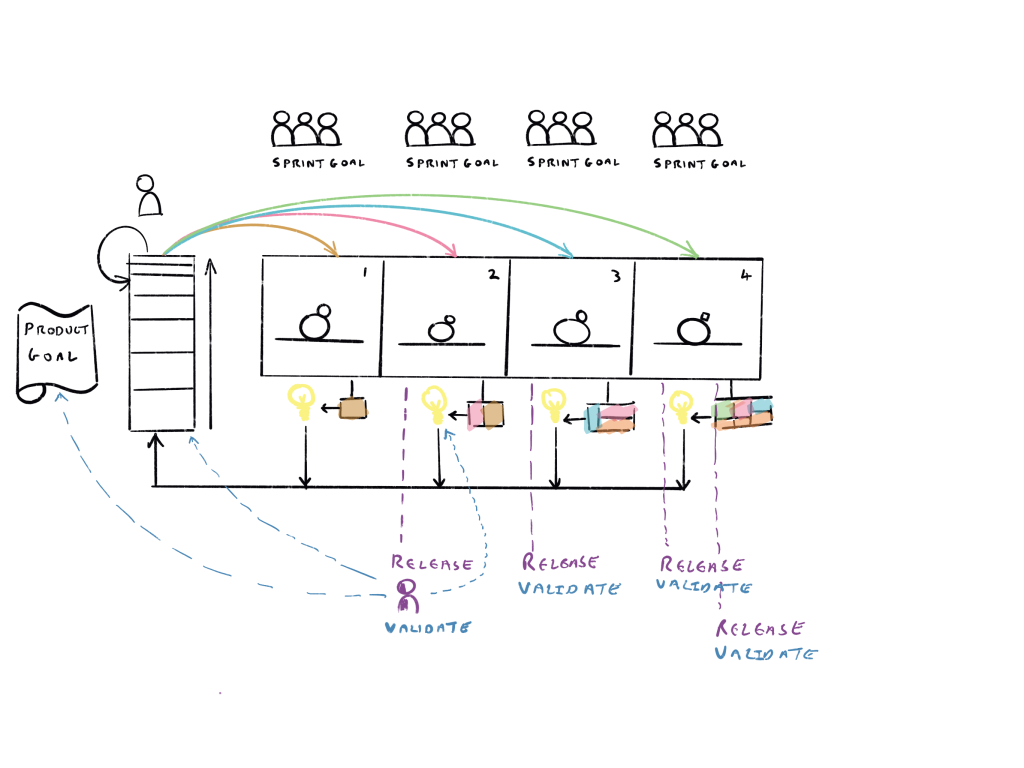
In Scrum we do not delay the release of value, because the product or service is in a working state at least once every Sprint. Releasing to a customer is a choice. Releasing, and validating our assumptions with users and customers, is how we maximise value. Each Sprint is an opportunity to collaborate with stakeholders and change direction if needed, while providing the stability and space to focus on valuable outcomes.
The Scrum framework enables:
- Maximum flow of value and minimal waste
- Rapid tactical and strategic decision-making
- Reduced decision-making latency
- Better decision quality, through cross-functional, self-managing teams focused on valuable outcomes
Yes, you could design a Kanban system to manage complex work. But Scrum is pre-packaged to tackle complex problems and supports continuous improvement along the way.
Scrum and Kanban are not mutually exclusive. Once a team has fully embraced empiricism through Scrum, Kanban practices can further improve workflow efficiency and predictability. Poor Kanban adoption, though, introduces inefficiency rather than removing it. See 8 red flags your Kanban adoption is incomplete.
Scrum is not just a process. It is a framework built to handle uncertainty and unpredictability. Through empirical process control, teams navigate complexity while continuously delivering maximum value.
Scrum is a powerful tool, but its effectiveness depends on understanding and applying it correctly. If you are ready to deepen your knowledge and apply these principles in practice, our Professional Scrum Master course is where to start.
Go deeper
Professional Scrum Master - AI Essentials (PSM-AI)
Put this into practice with the course that covers it in depth.
View the course