

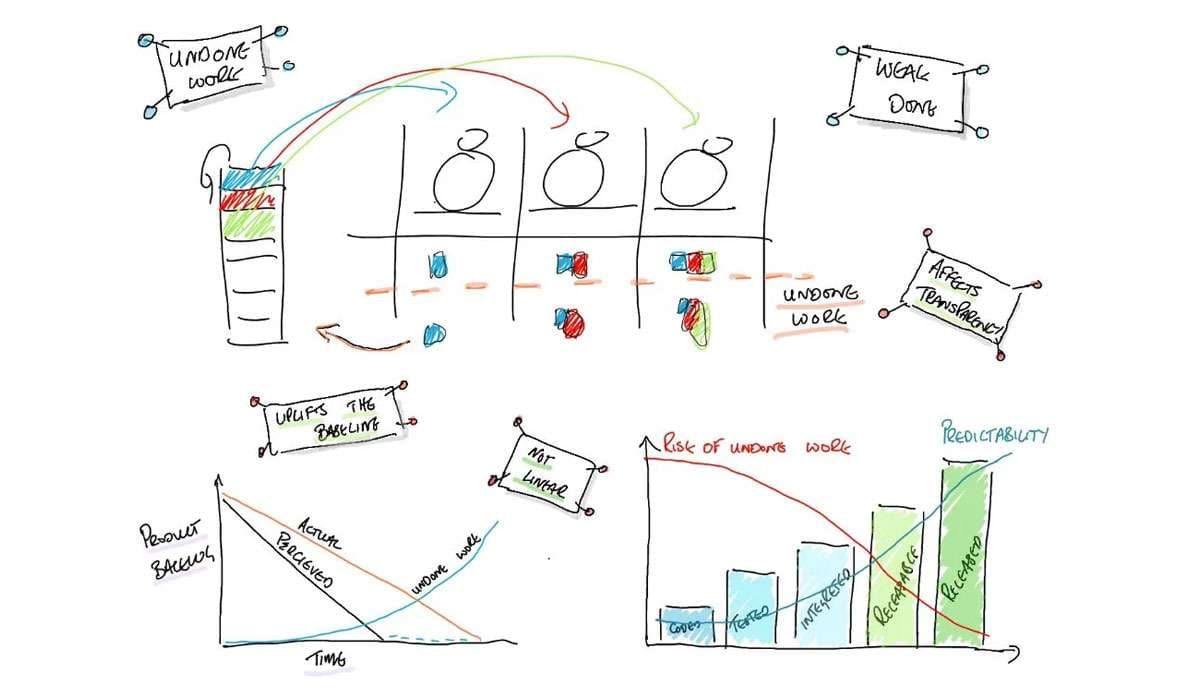
After we explore the Definition of Done in our Scrum.org training, and why it matters for transparency and the commitment to an Increment every Sprint, the same question comes up: how do we get started creating a Definition of Done?
It is not a surprising question. When we work with Scrum Teams we ask, "Where's your current Definition of Done?" The answer is usually one of these:
- We don't have one.
- Someone goes searching for a dusty document. "It's somewhere in Confluence."
- It is a certificate. It lists some activities they do in a Sprint and has not changed since it was written.
Once a team understands the critical role the Definition of Done plays in Scrum, enabling genuine feedback and validation from customers and the delivery of valuable products, the question becomes "How do we get started?"
For me, the place to start is transparency in three areas:
- Your current end-to-end workflow. Every activity needed to create a valuable, usable Increment the customer can use.
- Workflow versus current Definition of Done. How does the workflow compare with the Definition of Done? Where are the gaps?
- Improving the Definition of Done. What next steps could close the gap, so that at the end of each Sprint you have a valuable, releasable Increment?
Once you can see where you are and where you need to get to, the next step is gradually bringing those activities into the Sprint through inspection and adaptation. That is the hard part, and one for another post.
Before the practical steps, a quick recap on why the Definition of Done matters.
Why the Definition of Done matters
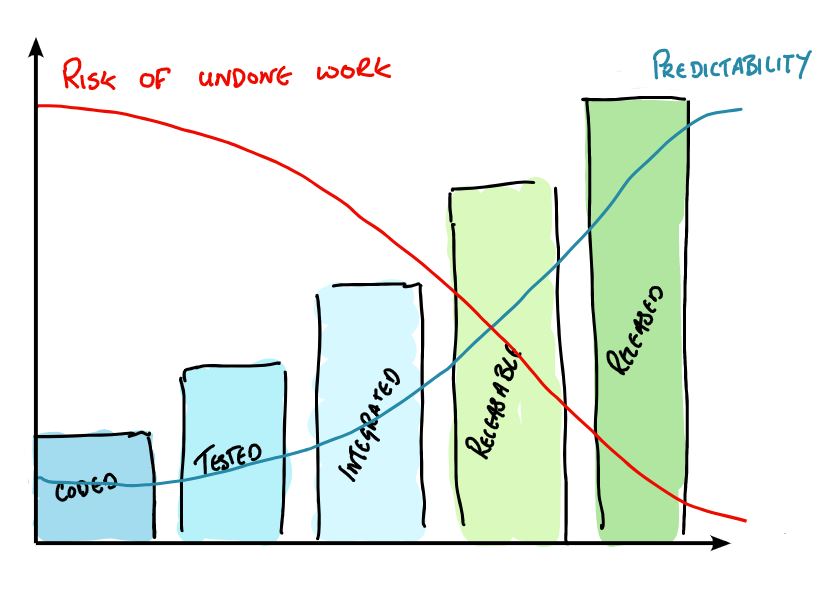
In Product Owners want a perfect Definition of Done we explain why a strong Definition of Done has to include every activity needed for a valuable, usable Increment every Sprint. It creates transparency, and it supports both empiricism and the predictability of your forecasts.
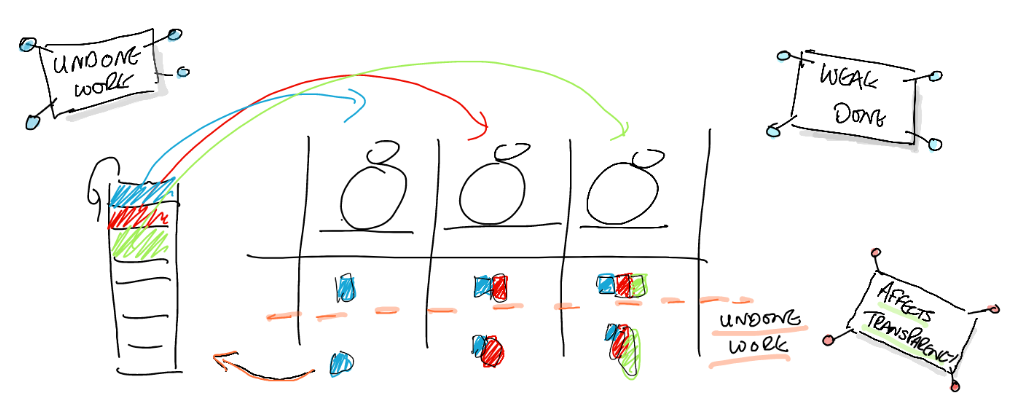
The sketch below sums up why the Definition of Done needs to mean releasable, and what happens to predictability when it does not and undone work piles up.
How to create a Definition of Done
Step 1: see everything needed for a valuable, usable Increment
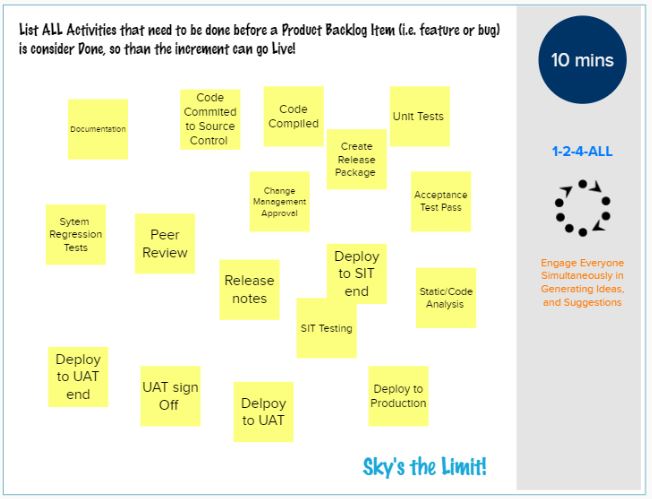
First, get transparency of all the activities needed to create a releasable Increment for your customer. There are several ways to do this.
One is to have the team list every activity that must happen before a Product Backlog item is Done and the Increment can go live. The sky is the limit. Do not be constrained by what you currently do in a Sprint.
Create a sticky note or card for each activity.
Simple brainstorming works. We have found the liberating structure 1-2-4-All especially useful, because it draws on everyone's intelligence and gets every voice in.
Another technique is to visualise your workflow with value stream mapping. The team maps the whole process together and sees where it is efficient and where it is not.
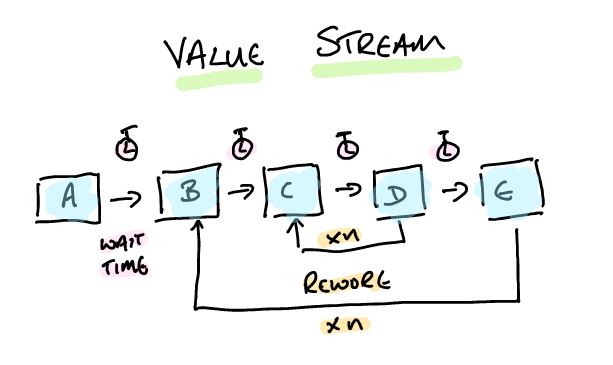
We always run a value stream mapping session when we start with a Scrum Team, to explore their workflow and value stream together. Any visualisation technique is powerful for understanding and collaboration, and this one is no exception. It gets the team on the same page and shows where improvement should focus.
As technical agile coaches we are often brought in to establish the technical excellence practices that enable business agility. Teams usually arrive with a preconceived idea of what they want to improve, with no evidence for it. Value stream mapping lets the whole team explore the workflow and collectively understand what stops value reaching customers as early as possible.
Step 2: benchmark your current Definition of Done against it
Next, use the activities you captured to see what is in your current Definition of Done and what is not. Everyone now has a clear understanding of what Done means today, and how much work is left outstanding, which is what affects your predictability.
This step often reveals to a Scrum Team the challenge ahead in creating a Done Increment every Sprint. Any activity not covered by the Definition of Done is work that must be added to the Product Backlog after each Sprint, so the full work needed for the product is transparent.
There are different ways to do this. Here are two we have picked up working with Scrum Teams. Both make clear what the current Definition of Done is and which extra activities are needed to make the Increment releasable.
Option 1: the box format
Draw three boxes, each bigger than and around the last. Different colours help. Name the inner box Now, the middle box Next, and the outer box Future.
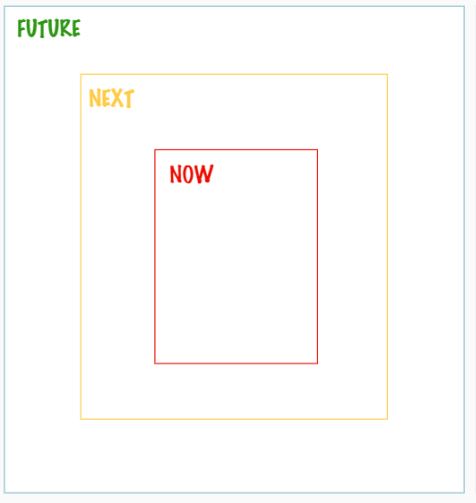
- Ask the team to go through the activities from step 1 and place everything they do, or should be doing, in a Sprint in the Now box.
- Then go through the remaining activities and place anything they could bring into a Sprint with little effort or permission in the Next box.
- Whatever is left goes in the Future box.
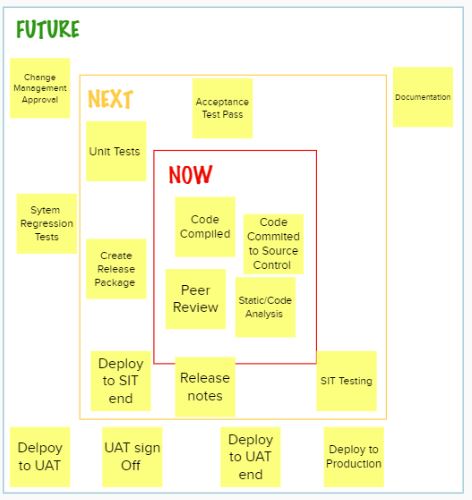
Option 2: the column format
Draw three lanes labelled Outside, Inside and Definition of Done.
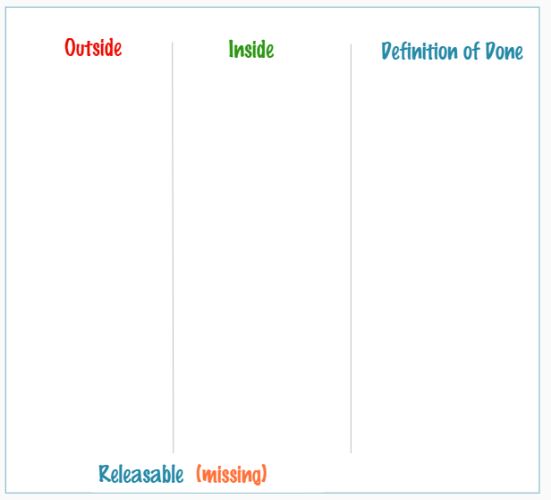
- Ask the team to go through the activities from step 1 and place everything they do, or should be doing, in a Sprint in the Definition of Done lane. As expected, this is their current Definition of Done.
- From the remaining items, pick the ones within the team's control, things they can do with little or no permission, and place them in the Inside lane.
- Everything else goes in the Outside lane.
Step 3: continuously improve towards a Definition of Done that means releasable
Whichever option you choose, you now have your current Definition of Done, the commitment for the Sprint Increment, and the possible next steps towards a releasable one.
- Every item outside the Definition of Done lane or box shows everyone the activities still required before the Increment is releasable, even when you say you are Done. It shows exactly how weak or strong your Definition of Done is right now.
- Your focus is to strengthen it: look at the Next or Inside items and move them into the Definition of Done. Having them visible prompts the discussions, and the support, the team needs to bring them across.
- Once those are in, move on to the Future or Outside items. These usually need organisational change or support. Making them transparent early starts the conversations with key people and leaders that will be needed to bring them in.
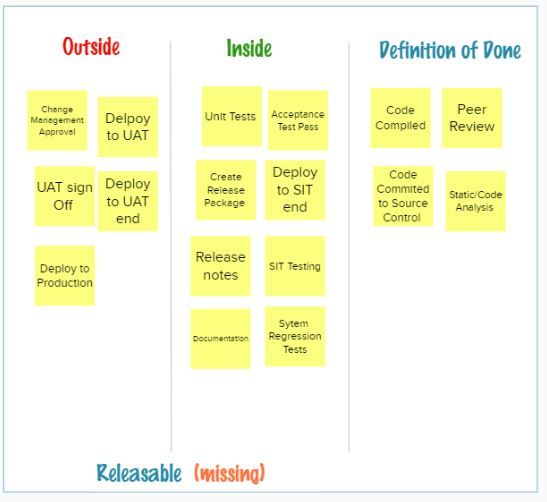
With the gaps in your process transparent, the next step is to inspect them, adapt your workflow, and bring the missing activities into the Definition of Done. That is how you get a valuable, usable Increment at the end of every Sprint.
Like further help?
We have put all of this into a Mural template you can download: Create your Definition of Done. If you have feedback on how to improve it, let us know.
If you use Scrum to deliver a software product, a new Scrum Team will almost certainly hit challenges creating a potentially releasable Increment every Sprint. We offer technical excellence training and coaching to help with exactly that. Get in touch if you would like to talk it through.