

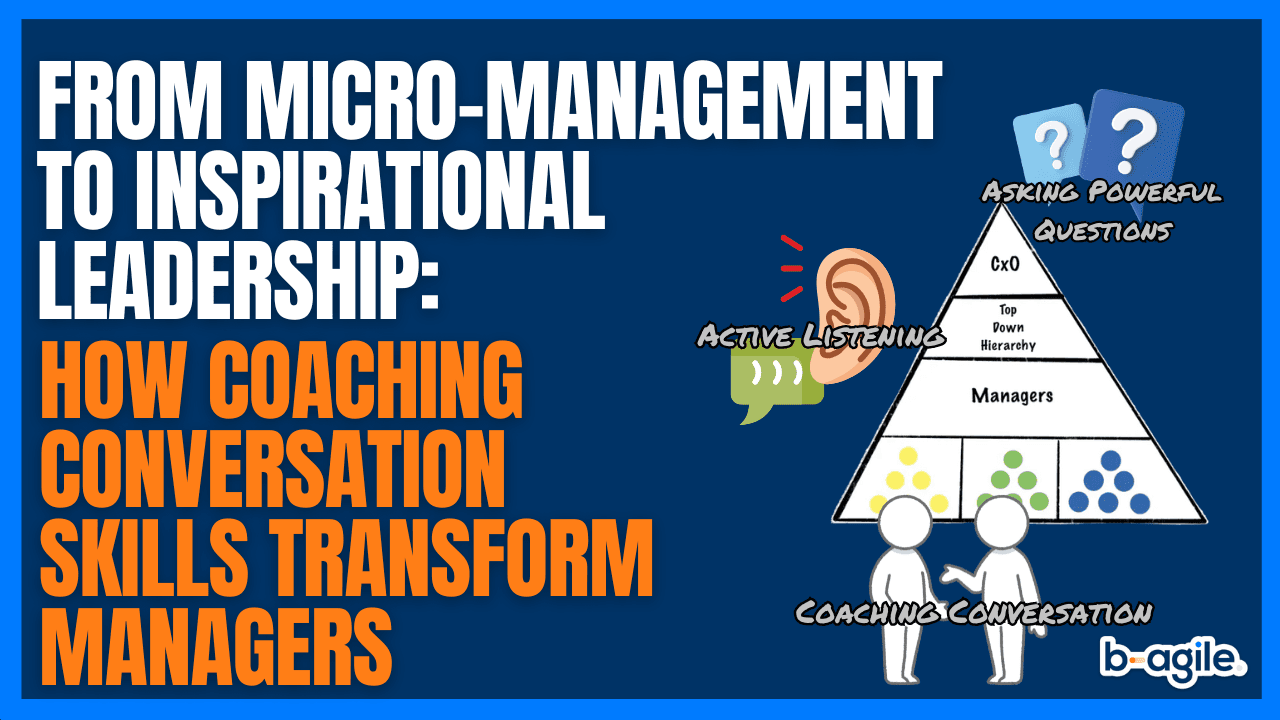
Are you caught in the micro-management trap?
Are you constantly stepping in to solve your team's problems? Trapped in a cycle of tactical decisions instead of focusing on strategy and growth? You are not alone. Many managers fall into the micro-management trap without realising the toll it takes on innovation, agility and value delivery.
There is a way out. Mastering coaching conversation skills shifts you from micro-manager to inspirational leader, and unlocks your team's potential and your organisation's success.
The true cost of micro-management
Every time a decision is requested, information travels through the organisation. It may be misunderstood and misinterpreted along the way. Decisions made on that information vary in quality. By the time they are passed back down the hierarchy to the people and teams who act on them, their impact and quality are unclear.
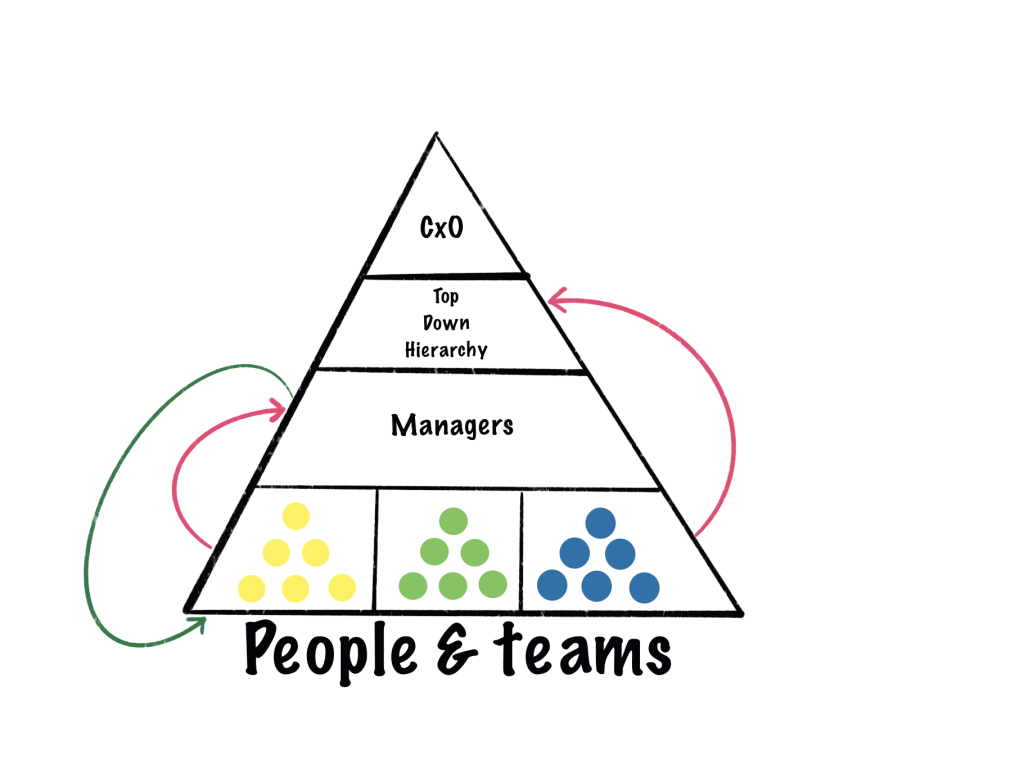
This decision-making latency and loss of decision quality carries a high cost for organisational agility:
- Lower ability to innovate
- Higher time to market
- Reduced customer and company value
- Decreased market share
The result is an organisation that struggles to adapt, deliver and thrive.
What micro-management really leads to
A lack of delegation
Leaders who do not trust their teams to handle problems independently create bottlenecks. Every issue has to pass through the leader, and value delivery slows.
Demotivation and low trust
When teams never get the chance to develop their problem-solving skills they disengage and feel less accountable. Innovative thinking and diverse perspectives are stifled.
Reduced creativity and innovation
By always providing the solution, leaders miss out on collective intelligence. Teams lose the chance to experiment, solve complex problems and discover new opportunities.
The secret to empowering high-performing teams
Here is a little secret. Those highly skilled, intelligent, creative, innovative and resourceful people you hire? They are highly capable decision-makers and leaders themselves.
In a volatile, uncertain, complex and ambiguous world, delegated decision-making, cross-functional self-managing teams and product-oriented organisational design are essential. They reduce decision latency and improve decision quality, which means:
- Maximum value
- Maximum flow of value
- Minimum waste
From micro-manager to leader: the skills that make the difference
Unlocking that value takes a shift in leadership style. Whether you lead from the front as a visionary or from behind by serving and supporting, three core skills define your success.
Active listening
Active listening means engaging with and interpreting your team's language, tone and emotions. It requires:
- Being fully present
- Acknowledging the team's thoughts and feelings
- Discovering deeper meanings and insights
It is the basis for effective questioning and guidance, and for thoughtful, helpful responses.
Asking powerful questions
Thought-provoking questions encourage deeper reflection and discovery. They push a team to think beyond its current perspective:
- "What holds you back?"
- "How does this align with our core values?"
Questions like these build self-awareness, clarity and innovative thinking.
Holding a coaching conversation
Active listening and powerful questions come together in an effective coaching conversation. These conversations:
- Inspire action and accountability
- Guide teams towards delegated decision-making
- Build confidence and deepen learning
With these skills, managers empower their teams to solve problems, innovate and deliver value consistently.
What you get as a result
A collaborative culture
Open communication, and teams that solve problems together through participatory facilitation. They brainstorm, collaborate and plan action as a cohesive unit.
Effective delegation
Delegation that grows with the team's maturity and skill, with support where it is needed. That builds ownership and responsibility.
Constructive feedback
Factual feedback that drives continuous improvement, innovation and better decisions.
Stronger problem-solving
Investment in the tools and techniques teams need to tackle challenges independently.
Leading by example
Showing vulnerability, admitting missteps and embodying the team's values. An environment where debate is encouraged and productive.
Facilitating, not dictating
Key decisions made clear after the team has discussed them, with responsibilities and commitments transparent.
Comfort with failure
Not every decision leads to the outcome you wanted. Those moments become opportunities to learn and grow.
The key coaching conversation skills for leaders
- Active listening. Fully engage with team members to uncover deeper insight.
- Powerful questioning. Encourage self-reflection and innovation.
- Structured coaching conversations. Lead discussions that inspire action and accountability.
Ready to shift from micro-management to inspirational leadership?
Mastering these skills is not just about leadership. It is about building an organisation that innovates, adapts and delivers value consistently. Get in touch to ask about our ICAgile Coaching Conversations course.